
Quick read
- ADHD brains are more likely to get stuck in cycles of rumination and overthinking.
- Workplace stress, lack of structure, and RSD can intensify mental exhaustion and burnout.
- Small changes like setting decision deadlines and challenging self-critical thoughts can help quiet the mental noise.
***
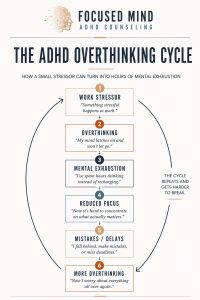
Having a hard time letting things go at work? ADHD and overthinking go hand in hand. It happens so often that it’s easy to overlook the connection between overthinking and after-work fatigue, burnout, and distraction.
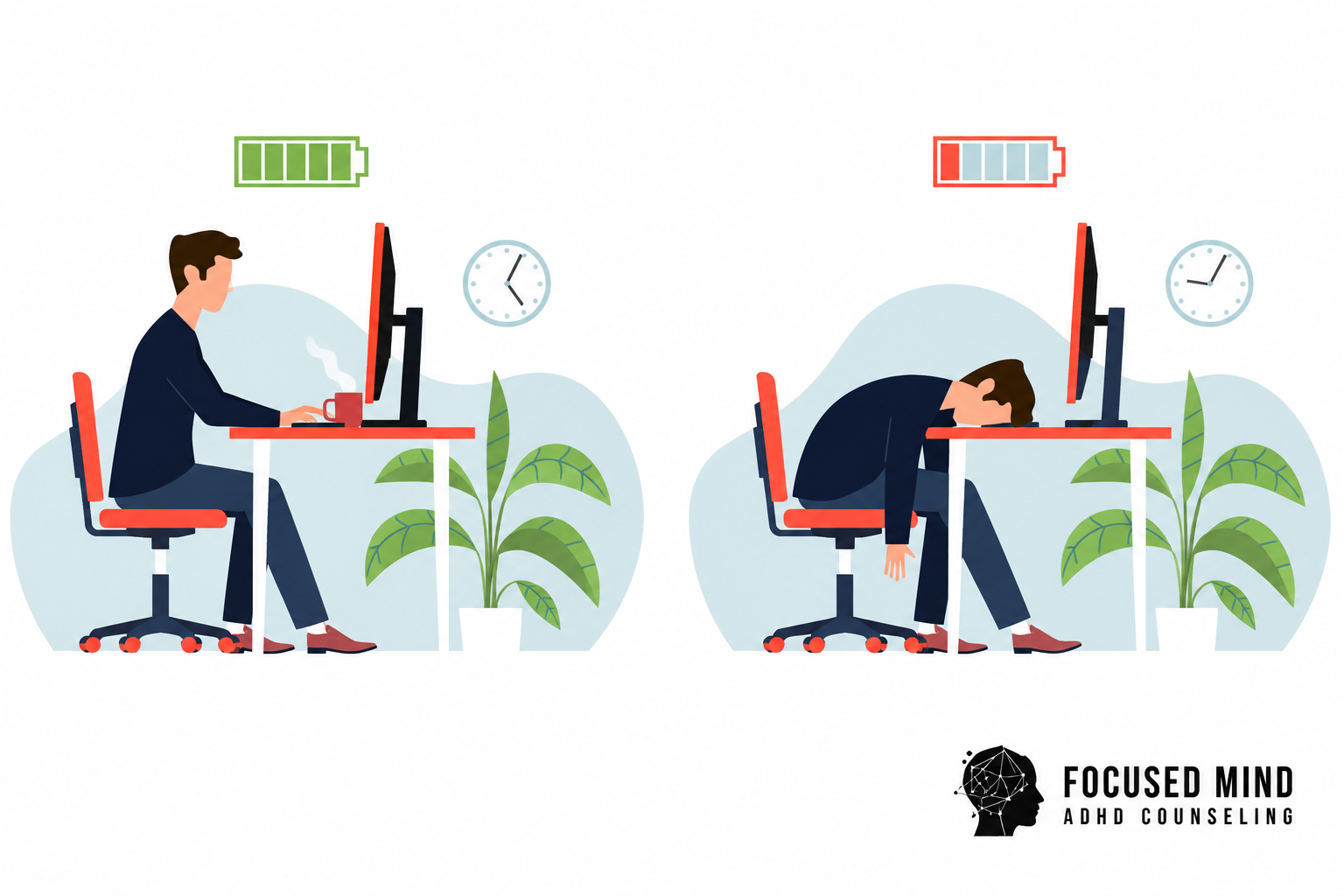
Many people with ADHD crash after work. They feel they’ve spent the whole day battling their mind; there is little left for anything else.
This exhausting cycle of overthinking and burnout can derail professional goals. Let’s dig into this overlooked struggle for ADHDers and how to gain more mental clarity.
How does ADHD cause overthinking?
While the term overthinking isn’t in the DSM criteria for ADHD, science supports a strong link between mental clutter and ADHD. Here are some examples:
Rumination
A 2024 PubMed study supports a strong link between ADHD and rumination, or excessive mind wandering. This means that the mind latches onto a topic and goes over it again and again. But that’s not all.
The study also links ADHD and a lack of mindfulness, the awareness of awareness. Without mindfulness, the brain goes anywhere it wants, and you might not even recognize how far off the path it’s gotten.
Working memory
The ADHD brain struggles to hold multiple pieces of information at once due to difficulties with working memory. This can create significant knowledge gaps within one’s own thoughts. The result might mean reviewing information because it’s hard to put the pieces together in your own mind.
Dysregulated dopamine
Most research confirms that ADHD brains regulate dopamine, the neurotransmitter responsible for rewards, differently. Because an ADHD person’s actions don’t have the same reward stimulation as non-ADHD brains, the mind gets stuck in wandering mode, unable to come online because the world around it can’t hold its boundless interests.
Common work situations that trigger ADHD overthinking
ADHD is a condition of executive functions: the part of the brain that supports working memory, sustained effort, task activation, planning, self-control, and filtering distractions. While all parts of life require executive functioning, work requires it more. This is often because jobs don’t always include activities that engage the ADHD brain.
Context matters with ADHD. This means that some work settings will support the ADHD brain, and others will drag it down. If you’re lucky, you have a job that you are passionate about. It has the right amount of simulation to keep you on task.
This is rarely a reality.
Back on Earth, many adults with ADHD need to navigate parts of work that don’t fit their ADHD. Here are some examples:
Toxic bosses
You know who I’m talking about. The person who focuses on your mistakes and overlooks your strengths. The one you’re walking on eggshells around all the time. This causes many people with ADHD to need to self-monitor their every move, if only to survive.
A lack of structure
When work lacks structure, some people with ADHD feel lost. They struggle to get motivated and organized and can lose track of time. This causes constant panic, making you always fear, “Am I missing something?”
Overstimulation
 Some work environments are overstimulating. Bright lights, loud co-workers, and constant fire drills. ADHD brains can sometimes get flooded with powerful emotions when the world around them is chaotic. This causes an inability to regulate and find focus.
The results of work settings that don’t fit the realities of ADHD leave many suffering in silence.
The role of rejection sensitive dysphoria (RSD)
Dan was constantly worried that people were mad at him. He couldn’t make plans with friends, ask women out for dates, or feel tongue-tied everywhere he went. Like most people with ADHD, Daniel is struggling with Rejection Sensitive Dysphoria (RSD).
People with RSD feel physical pain when expecting or experiencing rejection. You struggle deeply to find the words to even describe how you’re feeling.
RSD causes such strong nervous system reactions in people that they struggle to cope. One person with RSD might explode when rejected, while others might shut down and avoid risk entirely. RSD causes a life out of balance.
Internally, you struggle to regulate all the thoughts and feelings surrounding rejection. You wonder if you’re going to get fired, dumped, or ghosted. All the time. Talk about overthinking, right?
How to manage ADHD and overthinking at work
ADHD requires self-regulation. You can’t run the lawn mower 24/7 and expect not to explode when you roll over a stick. One way to manage the struggles of overthinking is to find tools to help with balance.
Practice good enough
Many people with ADHD are perfectionists. They work non-stop to ensure no one notices their mistakes. But there’s a problem. Endless hours trying to avoid mistakes, with overthinking.
Try to do an OK job instead of an amazing one. This sounds counterintuitive to success, but the time you’ll save thinking less will pay for itself in spades.
Set decision deadlines
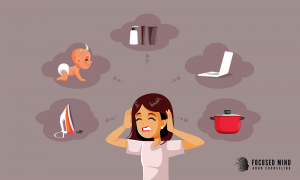 People with ADHD can have a near-obsessive focus on deciding. They can spend hours trying to avoid making a wrong one. This strategy often backfires.
Overthinking decisions can lead to missed deadlines and a loss of sanity. Rather than giving yourself more time to decide, try setting a timeline and sticking to it.
Challenge RSD thoughts
One way to manage sensitivity to rejection is with one’s own thoughts. You might be familiar with these RSD-related thoughts:
If I’m not nice, people won’t like me.
They wouldn’t like what I have to say; I might as well stay silent. I’m “too much” for people; maybe I shouldn’t even have friends.
These RSD thoughts lead to intense loneliness and despair. Rather than fall too deep into them, notice them. Once you catch one, question the evidence. What actually supports this fear that you can see and hear? Is there any evidence that disputes it?
When your brain never clocks out
Nothing that never turns off is outstanding. All living things need a reset. Easier said than done with ADHD, right?  But the first step is understanding the connection between ADHD and overthinking. With the right strategies—and, for some, a comprehensive ADHD evaluation- it becomes possible to spend less time stuck in your head and more time focused on what matters most
Stop overthinking with ADHD counseling in Columbus, OH
If you feel like you’re overwhelmed with overthinking, ADHD counseling or ADHD testing (if you’re not yet diagnosed) can help you better understand how to calm your busy mind. Many adults who struggle with overthinking realize that ADHD-related issues play a significant role, and a professional evaluation can provide the clarity needed to move forward.
Our Columbus ADHD testing and therapy center offers both in-person and virtual assessments led by clinicians experienced in adult ADHD. Through a thoughtful, supportive evaluation process, we help you explore how ADHD symptoms, including emotional sensitivity and stress responses, may be affecting your daily life and relationships.
Here’s how to get started:
- Fill out our online contact form to request ADHD testing, our clinical director or intake coordinator will follow up to schedule a complimentary 15-minute phone
- Meet with an ADHD specialist in Columbus, Ohio, who will guide you through the evaluation process and discuss your concerns in detail.
- Receive personalized recommendations and create an individualized plan for therapy that works for you.
You don’t have to keep navigating the process of setting boundaries on your own. The right assessment and counseling can help you better understand your experiences and build healthier ways to respond.
Other counseling services at Focused Mind ADHD Counseling in columbus, Ohio
Understanding how ADHD contributes to overthinking can be a powerful first step toward change. Through ADHD testing in Columbus and/or ADHD counseling in Columbus, Ohio, many adults gain clearer insight into their emotional responses and learn practical strategies to manage criticism, self-doubt, and interpersonal stress more effectively.
At Focused Mind ADHD Counseling, ADHD testing and treatment is holistic. Our practice provides both in-person and online ADHD-informed services for adults, including ADHD testing and individual and group therapy that address the broader impact of ADHD on emotional regulation, anxiety, depression, and relationship dynamics. We focus on helping clients translate diagnostic insight into meaningful coping tools and healthier patterns.
We also provide specialized counseling for men with ADHD, women with ADHD, and couples navigating ADHD-related challenges in their relationship. For additional education and support, our blog features therapist-written articles and practical resources that explore ADHD topics, including emotional sensitivity and daily life challenges, to help clients better understand themselves and move forward with greater confidence.
About the Author
 Billy Roberts, LISW-S, LCSW, is the founder of Focused Mind ADHD Counseling and a licensed psychotherapist specializing in adult ADHD. Based in Columbus, Ohio, he provides ADHD testing and therapy to help adults better understand challenges related to time management, focus, emotional regulation, and relationships. His ADHD-informed approach to assessment and treatment has been featured in Time Magazine, CNN, HuffPost, and Forbes, where he shares insights on helping individuals gain clarity about their symptoms and develop practical strategies for daily life.