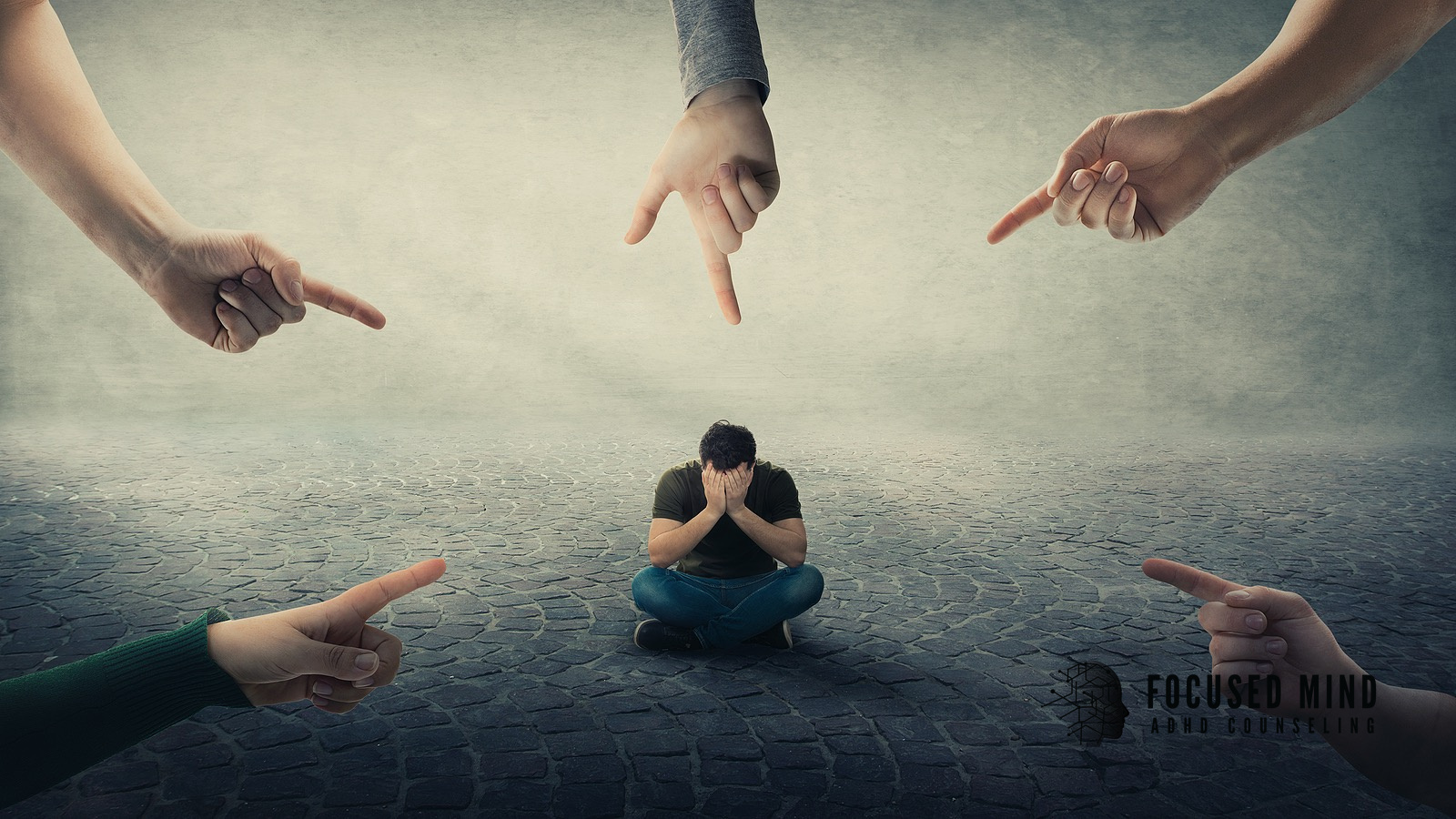
Once 5 pm hit, Robert felt like burnt toast. An entire day of feeling judged by everyone around him was draining. As he walked through the door of his house, the first words out of his wife’s mouth were “you forgot to pick up the flour.” Robert felt shame coursing through him, but quickly shoved it down. After getting the flour, he withdrew for the rest of the night. Rejection Sensitive Dysphoria (RSD) often hides deep under the surface for men with ADHD.
What is RSD?
RSD is part of the emotional regulation aspect of ADHD. Adults with ADHD struggle to manage the emotions associated with feeling misunderstood and rejected. And because ADHD adults live in a world built for brains different from theirs, they can rack up more criticism, particularly in childhood.
RSD can cause a range of responses. From complete avoidance to total shutdown. Adults with ADHD go to great lengths to avoid the intense pain of RSD.
And it is extremely painful.
In fact, people have described RSD as an “intense wordless pain,” and they named it after the Greek word for “despair.” It’s a relentless feeling that can take hours, days, and weeks to shake.
As the years go on, you learn to live life in hiding. You overcompensate and avoid risks. While you watch others achieve their goals, the shame you feel about your lack of success by comparison plunges you deeper into despair.
The Decline in Men’s Mental Health
How many men do you know (yourself included) who have a healthy outlet for their emotions? My guess is you laughed a little just now. Maybe not aloud, because you’d prefer others didn’t know you were reading a blog about RSD. But right behind that grin of yours, you know how ironic it is that men and “healthy outlet for emotions” were put into the same sentence.
All joking aside, there aren’t many ways for men to deal with their emotions. And men’s ways to deal with their emotions are limited. For example, sports and working out to “let off steam” or “deal with anger.”
What results from a lack of outlets to manage the spectrum of emotions can be extreme measures to avoid feeling at all. Drinking one too many cocktails at night or drowning yourself in your work.
And it’s only downhill from there.
Signs of RSD
Because RSD often hides in men, knowing the signs can help. Here are a few:
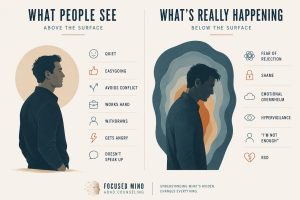
Conflict Avoidance
People with RSD avoid tough conversations. They procrastinate having them at all. When they do, they are more agreeable than would serve them. The phrase “yes, dear,” comes to mind. RSD makes you believe self-assertion will lead to rejection or criticism. So you avoid hard conversations entirely.
People-Pleasing
Overcommitment, saying yes, flushing boundaries down the toilet-sound familiar? Well, you might be a people-pleaser. If you have ADHD, it would basically come with the territory. One big reason for this is RSD. To avoid criticism, you let others have their way. Even more, you let others dominate your life and take up all the space.
However, as your people-pleaser energy bottles up, your resentment grows. This can lead to anger management issues.
Anger Mismanagement

Many people with ADHD have anger management struggles. On the one hand, ADHD and emotional regulation just go hand in hand. This leads to low frustration tolerance and impulsive reactivity. However, there is something underneath the surface for men with ADHD.
A deep vulnerability to criticism. Once triggered, a strong emotional reaction may occur, such as defensiveness or even yelling. While the world around you says you need to control your anger, this only leads to a deeper RSD experience. Critics and rejecters only trigger RSD behavior.
RSD Triggers
Everyone’s RSD is different because our unique brains as people with ADHD are, well…different. But there are some patterns. Here are a few common RSD triggers.
Feeling Misunderstood
Many people with RSD mask themselves from others. They hide their truest thoughts, ideas, and beliefs. However, over time, the gaps in understanding grow wider as you lose contact with people who see the real you.
Feedback…Like Literally Any Feedback.
We can’t go through life without getting feedback. Despite ADHD and perfectionism being so closely linked, at some point, someone will have something to say to you that isn’t a compliment. For adults with ADHD and RSD, this can feel like a crushing blow. It doesn’t matter if it’s true or an accident. In your RSD mind, EVERYONE hates you.
Social Media
Somewhere, right now, there is a therapist hearing about a social media post that triggers an ADHD person’s RSD. In fact, there are likely to be 100 therapy sessions about this. So if you’ve felt rejected by a social media post, you’re not alone. It can be devastating to see pictures of your friends hanging out without you, especially when you have RSD. This can lead to a lot of “reject them before they reject me” energy. Leading many ADHD men to not make plans or take the initiative.
Managing RSD as an ADHD Man
RSD is part of the ADHD brain. So you can’t “cure” RSD. Instead, you can learn to manage life differently. In a way that increases security, connection, and belonging.
Manage Emotions
To manage RSD, you’ve got to learn to become a master of your emotional state. Here are three common ways to get started:
Mindfulness of Emotions
You’ve got to name emotions to tame emotions. To gain better control of your feelings, start practicing emotional mindfulness. This can start with the basics: fear, guilt, anger, sadness, shame, and joy. Learn to be aware of these even when you’re not “upset.” Set a schedule or a time to check in with yourself daily.
Meditation
 Speaking this word makes most people with ADHD feel a little sick. So call it something else, hot pickles? Whatever you want to call it, learning to quiet the mind and body helps you check in with yourself and avoid big reactions you’ll regret later.
Remove Yourself; Find Safety
Be it shutting down or exploding, RSD comes with big reactions. Because these reactions happen quickly, it can help to take a time-out from the stressor at hand. But don’t just sit alone in a room. Manage emotions such as fear, guilt, or shame by finding safety. Take a deep breath, give yourself some affection, and be with a pet.
Start ADHD Counseling in Columbus, OH
Wondering how to cope with RSD? You don’t have to live your life feeling disconnected and alone. Focused Mind ADHD Counseling can help you find solutions to living with RSD. Our Columbus, OH, counseling practice has caring therapists who specialize in ADHD treatment. To start your counseling journey, follow these simple steps:
- Fill out the contact form to schedule a free 15-minute phone
- Meet with one of our caring therapists.
- Stop feeling the sting of rejection and start finding confidence.
Other ADHD services offered at Focused Mind ADHD Counseling
Adult ADHD testing is not the only service we offer at our Columbus, OH, counseling practice. At Focused Mind ADHD Counseling, we offer a variety of mental health services, including ADHD treatment. As an adult with ADHD, you may also benefit from anxiety treatment for ADHD, counseling for men with ADHD, counseling for women with ADHD, ADHD-focused couples therapy, and depression counseling for ADHD. You can also view our blog for more resources and helpful info.
About the Author

Billy Roberts, LISW-S, LCSW, is the founder of Focused Mind ADHD Counseling and a licensed psychotherapist specializing in adult ADHD. Based in Columbus, Ohio, he provides ADHD testing and therapy to help adults better understand challenges related to time management, focus, emotional regulation, and relationships. He is the author of the forthcoming book: Wired to Please: Unmasking the ADHD People-Pleaser. His ADHD-informed approach to assessment and treatment has been featured in Time Magazine, CNN, HuffPost, and Forbes, where he shares insights on helping individuals gain clarity about their symptoms and develop practical strategies for daily life.
FAQs
What causes rejection-sensitive dysphoria in adults?
RSD is caused by the wiring of an ADHD brain. It creates incredibly strong emotions. It is neurological, brain-based, but something you can manage (rather than “fix”). For example, changing your reaction rather than trying to change your feelings.
What is the difference between RSD and social anxiety?
Social anxiety is usually based on experiences. One has experiences that increase their anxiety over time. You might struggle with public speaking and making friends as a result. RSD is brain-based and much more pervasive and unpredictable. It’s not just about building confidence; it’s about coping ahead of RSD triggers and practicing self-acceptance more broadly.