

The Quick Read
- ADHD and emotions are deeply connected. Emotional dysregulation is a core feature of ADHD, not just a side effect. Yet it remains one of the most misunderstood and misdiagnosed aspects of the condition.
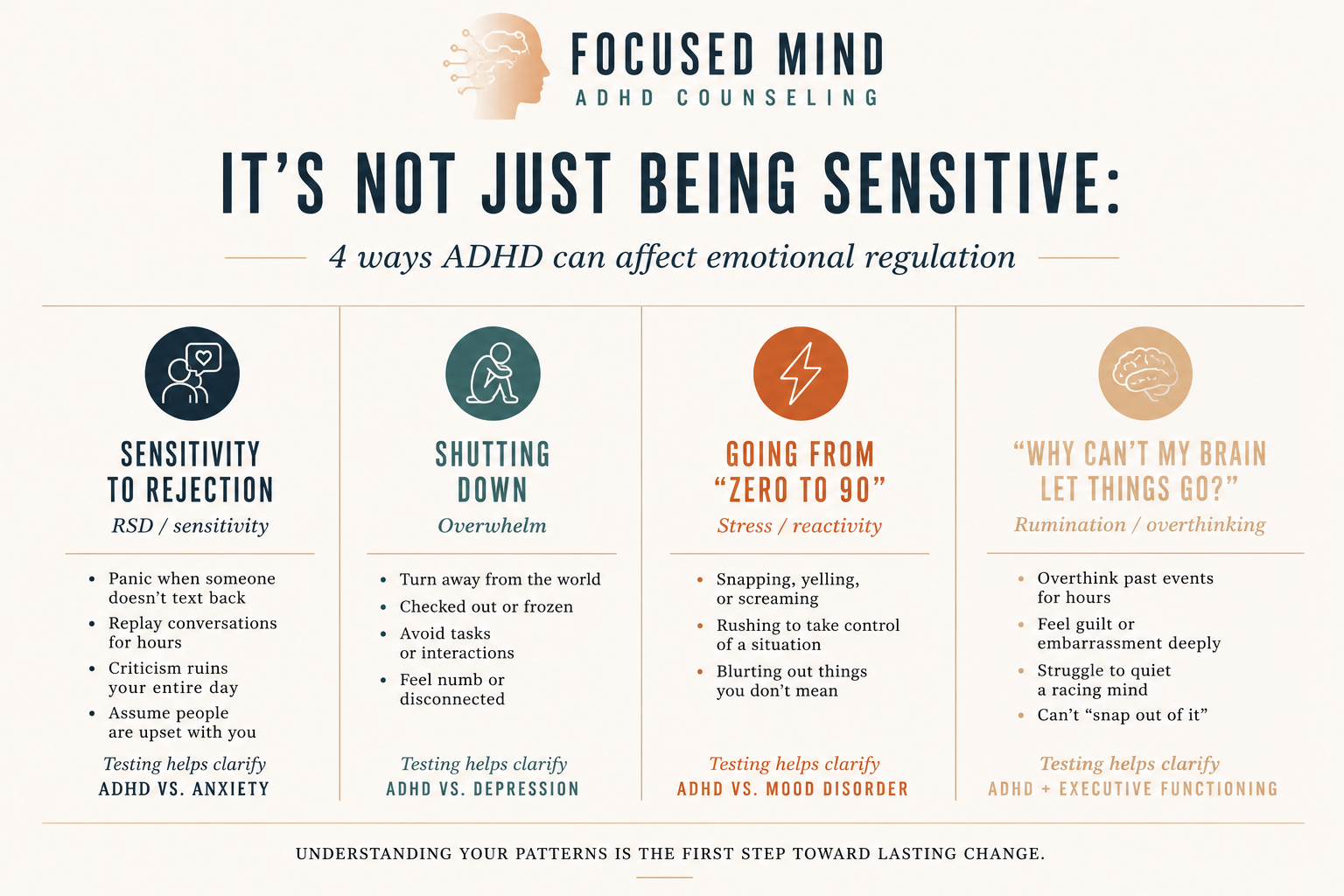
- The most common signs include: rejection sensitivity (RSD), emotional shutdowns, zero-to-90 reactions, and relentless rumination that the brain simply can’t switch off.
- It’s frequently mistaken for something else. Anxiety, depression, and bipolar disorder often get the diagnosis while underlying ADHD goes untreated. This makes other treatments less effective.
- Feeling “too sensitive” isn’t a character flaw. It’s a neurological pattern rooted in how the ADHD brain regulates emotion and communicates internally.
- ADHD testing in Cleveland connects the dots. A comprehensive evaluation identifies patterns across your lifetime, rules out overlap with other conditions, and builds a personalized treatment plan around your actual diagnosis.
What Does Emotional Dysregulation Look Like?
The word is out: adults with ADHD feel more deeply than others. But ADHD and emotional dysregulation are still widely misunderstood. In fact, it’s the cause for many adults with ADHD to be misdiagnosed and struggle to find the help they need.
Many adults with ADHD feel bad about their struggles managing emotions. They are criticized constantly for being “too sensitive.” When they lose their tempers, they quickly feel remorse and struggle to find answers about how to cope with big feelings.
For undiagnosed adults with ADHD, ADHD testing is often the first step toward understanding their emotions, improving emotional regulation, and finally feeling understood.
What is Emotional Dysregulation in ADHD?
A recent study in BMC Psychiatry looked to further support evidence that emotional dysregulation in ADHD is a core feature of the condition. To complete this study, emotional dysregulation was divided into three categories: emotional liability, emotional recognition, and emotional creativity. Similar to many studies, people with ADHD were found to experience higher levels of emotional dysregulation.
Most interestingly, the study found that emotional liability (ups and downs) and reactivity were the most distressing for adults with ADHD.
When most people think of ADHD, they usually think of impulsivity or being restless. But few people understand the struggles of living with an emotional rollercoaster. In fact, it’s not until someone with ADHD sees a doctor or specialist in ADHD that they are able to tease out what’s emotional dysregulation related to ADHD versus something else.
Common Signs of ADHD Emotional Dysregulation
While the American Psychological Association has recognized that emotional dysregulation in ADHD is strongly supported by research, it also notes that emotional symptoms can vary significantly from person to person.
Because emotional patterns are shaped by both ADHD and lived experiences, the way people experience and express emotions is highly individualized. However, there are several common signs of emotional dysregulation in ADHD that many adults tend to relate to more broadly.
Sensitivity to rejection
Have you ever thought about a friend not texting you back for hours? Did you worry you did something wrong, only to find out they were busy with work? This can be a common symptom of rejection sensitive dysphoria (RSD), a common symptom related to ADHD. RSD has been described as an “intense, wordless” pain that can paralyze you from moving forward or taking action day to day.
RSD can be included as one form of emotional dysregulation. It’s the brain’s response to regulating fear of criticism and the shame and guilt that can consume the ADHD brain.
You might relate to RSD if:
- You panic when someone doesn’t text back
- You replay conversations for hours
- Criticism ruins your entire day
- You assume people are upset with you
Shutting down
When John came in for ADHD testing, it was because his wife reported reading about the ADHD shutdown. Whenever John felt overwhelmed, he turned away from the world. It wasn’t that he didn’t care. In fact, his wife’s criticism of him for seeming “checked out” only made him feel worse.
John struggled with the ADHD shutdown, another way of experiencing emotional dysregulation. Because emotional regulation includes being aware of emotions, many people with ADHD can sit within them for hours without even knowing why.
Going from “zero to 90.”
Dr. Ned Hallowell has explained how emotions come on more quickly in people with ADHD. Part of the issue is that those emotions come out faster than for people without ADHD. People without ADHD notice their emotions and can regulate them internally. For those with ADHD, you might react to them at lightning speed.
This can look like the following:
- Anger management issues (screaming, yelling, snapping)
- Rushing to take control of a situation that makes you anxious
- Blurting out things you don’t mean in the heat of the moment
“Why Can’t My Brain Let Things Go?”
Thoughts and emotions are connected. Dr. Thomas Brown has called emotional dysregulation and ADHD a “virus of the mind.” Have you ever thought about a situation that made you feel guilty or embarrassed for hours? You’re not alone; this is common for adults with ADHD.
When the brain overthinks past events, that’s called rumination, which can look different in adults with ADHD. For you, it might feel uncomfortable. While your friends and family tell you to “snap out of it,” you truly feel like you cannot stop overthinking.
One reason for this may involve differences in the brain’s default mode network — the system associated with daydreaming, imagination, and inward-focused thinking. In ADHD brains, communication between the brain’s problem-solving networks and creative or imaginative networks does not always regulate efficiently. The result can be difficult “shutting off” the mind, leading to excessive mental wandering, overthinking, and emotional rumination.
Why is ADHD Emotional Dysregulation Frequently Missed?
ADHD and emotional dysregulation are highly misunderstood. For many adults, emotional dysregulation is often attributed entirely to other mental health conditions they may also experience, such as anxiety, depression, or bipolar disorder. While these conditions can absolutely co-occur with ADHD, many adults continue struggling with emotional intensity, irritability, overwhelm, or mood reactivity even when those conditions are being treated effectively.
In some cases, untreated ADHD can make treatment for other mental health conditions less effective, particularly when executive functioning difficulties and emotional regulation challenges remain unaddressed.
How Can ADHD Testing in Cleveland Help With Emotional Dysregulation?
ADHD testing in Cleveland, Ohio, works to identify ADHD clearly.
Step 1: Identify the patterns
ADHD testing isn’t just a screening. To have ADHD, symptoms have impacted a person across their lifespan. Testing helps connect the dots for a more accurate diagnosis.
Step 2: Rule out overlap
A comprehensive evaluation helps clarify whether symptoms are better explained by ADHD, anxiety, depression, stress, or all of the above.
Step 3: Use multiple data points
ADHD testing includes several evidence-based measures. For example, the Brown ADHD Scales, a clinical interview to take your medical, social, and functional history, a collateral report, executive functioning measures, and a review of daily life challenges.
Step 4: Get clear feedback and answers
Testing provides diagnostic clarity. Not just whether you have ADHD or not, but what type of ADHD you have, and in severe cases. By learning more about your exact diagnosis, you can uncover how ADHD may be affecting work, relationships, motivation, and emotional regulation.
Step 5: Build a treatment plan that works
After testing with Focused Mind ADHD Counseling, recommendations can guide ADHD therapy, skills, routines, medication conversations, and practical next steps to start building the life you want.
Ready to Get Clear Answers About Emotional Dysregulation? ADHD Testing in Cleveland, OH, Can Help
Wondering whether your emotional struggles are connected to ADHD? A thorough, professional evaluation doesn’t just give you a label — it gives you a roadmap. And in Cleveland, that kind of clarity is closer than you think. Our Ohio clinic offers both in-person and virtual ADHD assessments designed to go beyond surface-level screening.
Every evaluation is led by experienced clinicians who specialize in ADHD and understand how easy it is to be misdiagnosed or missed entirely, without a truly comprehensive process. From your first conversation to your final results, you’ll have expert guidance at every step, so nothing gets overlooked and nothing feels rushed.
Here’s what getting started looks like:
- Submit our contact form. Our clinical director or intake coordinator will reach out promptly to schedule a free 15-minute phone consultation at a time that works for you.
- Connect with an ADHD specialist in Cleveland who will walk you through the full assessment process, explain what to expect, and make space for every question you have along the way.
- Receive a thorough, accurate picture of your symptoms, along with professional insight and personalized next steps, so you can move forward with confidence rather than continued uncertainty.
An accurate diagnosis can change everything. You deserve an evaluation that’s as thorough as your symptoms are complex, and a team that takes the full picture of who you are seriously.
Other Services Focused Mind ADHD Counseling Provides in Cleveland and Throughout Ohio
Getting a detailed, accurate diagnosis is an important step toward navigating your ADHD symptoms. Through ADHD testing and therapy, many adults gain clarity about why things like time management and focus feel so difficult and learn practical strategies to improve planning, follow-through, and daily routines.
At Focused Mind ADHD Counseling, ADHD assessments are just one part of the support we provide. Our practice offers both in-person and online ADHD treatment for adults, including individual and group therapy that addresses the broader effects of ADHD, such as anxiety, depression, and relationship stress. Our clinicians work with clients to turn diagnostic insight into practical tools that support better organization, awareness, and emotional balance.
We also provide specialized counseling for men with ADHD, women with ADHD, teens with ADHD, and couples who are navigating ADHD-related challenges in their relationship. For ongoing learning and support, our blog features therapist-written articles and helpful resources that explore ADHD topics and offer strategies for managing everyday life more effectively.
About the Author

Billy Roberts, LISW-S, LCSW, is the founder of Focused Mind ADHD Counseling and a licensed psychotherapist specializing in adult ADHD. Based in Columbus, Ohio, he provides ADHD testing and therapy to help adults better understand challenges related to time management, focus, emotional regulation, and relationships. His ADHD-informed approach to assessment and treatment has been featured in Time Magazine, CNN, HuffPost, and Forbes, where he shares insights on helping individuals gain clarity about their symptoms and develop practical strategies for daily life.
FAQs
Can ADHD testing be done virtually in Ohio?
Yes! Focused Mind ADHD Counseling offers virtual ADHD testing. Research shows the outcome of ADHD testing is the same when done in person versus virtually. However, a quality ADHD evaluation should take the time to understand the full picture, including executive functioning, emotional regulation, anxiety, burnout, masking, and how ADHD impacts your daily life.
What happens after an ADHD diagnosis?
At Focused Mind ADHD Counseling, we offer a variety of ADHD-related services. We also help clients understand emotional regulation, coping strategies, lifestyle changes, and treatment options, such as medication when appropriate. This is especially important for high-functioning adults and women with more internalized ADHD symptoms. These are often overlooked or misunderstood by other providers.
To ensure you have the ability to access care, we create a 25- 30-page ADHD testing report. It’s complete with data to support your diagnosis.